Using Icons on the Iconostasis to Teach the Faith (Part 2)
St. John the Baptist
Matthew 11 quotes Christ as saying that there was no greater Old Testament saint than John the Baptist. St. John was chosen to prepare the way for Christ by preaching repentance and he was also chosen to baptize Christ himself at the beginning of His three year ministry. For these reasons John the Baptist is always shown on the iconostasis.
Teaching
John the Baptist is almost always shown standing. This reflects how Orthodox worship God. Continuing the practice of the early Christians of standing in the Divine Liturgy, the 'servants' acknowledge the presence of their Lord. Standing also symbolizes the future rising from the dead in the General Resurrection and reflects that we have already risen with Him in baptism, the sacrament that makes us a part of His body, the Church..
Iconography
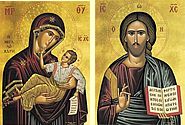
St. John's icon has a halo which appears on all saints. Unlike Western depictions, however, the Orthodox halo is always shown radiating from the person (touching each shoulder) rather than floating in the air. This is because the kiingdom of God is within us and the holiness of the saints resulted from their active cooperation with the inner grace of the the Holy Spirit. The holiness radiates out of their spirit rather than 'floating down' artificially. Halos of Christ usually have a cross symbolizing the Trinity and the Greek letters 'WON' meaning "I am" (Eternal God).
Other Saints
A variety of saints appear on local parish's icon screens, very often including St. Stephen, the first martyr. You will want to give a brief biographical description of the saint unique to your parish.
Teaching
We do not worship the Theotokos or individual saints: we honor and venerate them in order to ask for their prayers for us. James 5 says that the 'prayer of a righteous man' is effective and Revelation 5:8 shows that the prayers of the saints are offered like incense to God. More than this, there are countless examples of miracles and miraculously answered prayers that are the result of the intercession of the saints that did not stop with Early Church but which continue to the present day. Like the Early Church, we also offer prayers for the souls of departed Christians.
Iconography
Icons are written, not painted, according to precise canons (laws) of the Church. The images are flat or two-dimensional because in heaven there is no time or space. There are no shadows because the light in heaven is from God. Saints face the view while others are shown in profile. Colors have meaning: blue is spiritual, red is earthly or the blood of martyrdom, black is death, white is purity and gold is divinity. Bells are called 'singing icons'.
Angels
Angels are God's messengers and do God's Will. Archangels Michael and Gabriel often appear on the doors in the iconostasis perhaps symbolic of their coming and going just as the deacon and altar servers come and go during Liturgy.
Teaching
While angels are sometimes used to convey God's messages to man, the primary source of God's revelation is Church Tradition. The teachings Christ gave the apostles was passed down to their successors, the bishops. The preeminent revelation was organized into what we know as the Bible but it is important to realize that the Bible came from Tradition. Christ did not directly give the Bible to Christians: the Church Fathers did through the guidance of the Holy Spirit. The writings of the Early Fathers also teach us how to correctly understand and apply what is contained in the Bible rather than leaving it to each individual.
Iconography
The Archangel Michael is usually shown with a sword illustrating his role as leader of the Hosts of God. St. Gabriel is often shown with an staff and orb representing the authority of God given to the angels in their important missions.
Mystical Supper
The icon above the Royal Doors shows the Mystical Supper when Christ instituted the Eucharist. The apostles are shown with the Lord in the upper room on Holy (Maundy) Thursday, hours before he was betrayed by Judas. It is here that the Lord first transformed the bread and wine into His actual Body and Blood.
Teaching
John 6 records Jesus teaching that we must eat and drink His real Body and Blood to have spiritual life. The Jews were offended and some disciples left revealing that they understood He was talking about actually eating flesh and blood, not spiritually 'feeding' on His teachings (which would not have been offensive). Orthodox worship is called the Divine Liturgy. In the liturgy the priest consecrates the bread and wine so that they supernaturally become the same body and blood that the first apostles consumed in the Upper Room. While Christ died on the cross only once, His sacrifice is beyond time since the apostles consumed if before the crucifixion and we consume it today.
Iconography
The complete buildings and curtains show that this scene in indoors. We are able to recognize the Apostle John who is young (without a beard) and reclining on Jesus as the Gospel tells. Judas is shown reaching toward the bowl which reveals him as the traitor. This icon is always in the center above the door as it is the central part of our worship of God and source of His Grace to us.
Next....
Using Feast Day Icons to Teach and Evangelize (Part 3)
St. John the Baptist
Matthew 11 quotes Christ as saying that there was no greater Old Testament saint than John the Baptist. St. John was chosen to prepare the way for Christ by preaching repentance and he was also chosen to baptize Christ himself at the beginning of His three year ministry. For these reasons John the Baptist is always shown on the iconostasis.
Teaching
John the Baptist is almost always shown standing. This reflects how Orthodox worship God. Continuing the practice of the early Christians of standing in the Divine Liturgy, the 'servants' acknowledge the presence of their Lord. Standing also symbolizes the future rising from the dead in the General Resurrection and reflects that we have already risen with Him in baptism, the sacrament that makes us a part of His body, the Church..
Iconography
St. John's icon has a halo which appears on all saints. Unlike Western depictions, however, the Orthodox halo is always shown radiating from the person (touching each shoulder) rather than floating in the air. This is because the kiingdom of God is within us and the holiness of the saints resulted from their active cooperation with the inner grace of the the Holy Spirit. The holiness radiates out of their spirit rather than 'floating down' artificially. Halos of Christ usually have a cross symbolizing the Trinity and the Greek letters 'WON' meaning "I am" (Eternal God).
Other Saints
A variety of saints appear on local parish's icon screens, very often including St. Stephen, the first martyr. You will want to give a brief biographical description of the saint unique to your parish.
Teaching
We do not worship the Theotokos or individual saints: we honor and venerate them in order to ask for their prayers for us. James 5 says that the 'prayer of a righteous man' is effective and Revelation 5:8 shows that the prayers of the saints are offered like incense to God. More than this, there are countless examples of miracles and miraculously answered prayers that are the result of the intercession of the saints that did not stop with Early Church but which continue to the present day. Like the Early Church, we also offer prayers for the souls of departed Christians.
Iconography
Icons are written, not painted, according to precise canons (laws) of the Church. The images are flat or two-dimensional because in heaven there is no time or space. There are no shadows because the light in heaven is from God. Saints face the view while others are shown in profile. Colors have meaning: blue is spiritual, red is earthly or the blood of martyrdom, black is death, white is purity and gold is divinity. Bells are called 'singing icons'.
Angels
Angels are God's messengers and do God's Will. Archangels Michael and Gabriel often appear on the doors in the iconostasis perhaps symbolic of their coming and going just as the deacon and altar servers come and go during Liturgy.
Teaching
While angels are sometimes used to convey God's messages to man, the primary source of God's revelation is Church Tradition. The teachings Christ gave the apostles was passed down to their successors, the bishops. The preeminent revelation was organized into what we know as the Bible but it is important to realize that the Bible came from Tradition. Christ did not directly give the Bible to Christians: the Church Fathers did through the guidance of the Holy Spirit. The writings of the Early Fathers also teach us how to correctly understand and apply what is contained in the Bible rather than leaving it to each individual.
Iconography
The Archangel Michael is usually shown with a sword illustrating his role as leader of the Hosts of God. St. Gabriel is often shown with an staff and orb representing the authority of God given to the angels in their important missions.
Mystical Supper
The icon above the Royal Doors shows the Mystical Supper when Christ instituted the Eucharist. The apostles are shown with the Lord in the upper room on Holy (Maundy) Thursday, hours before he was betrayed by Judas. It is here that the Lord first transformed the bread and wine into His actual Body and Blood.
Teaching
John 6 records Jesus teaching that we must eat and drink His real Body and Blood to have spiritual life. The Jews were offended and some disciples left revealing that they understood He was talking about actually eating flesh and blood, not spiritually 'feeding' on His teachings (which would not have been offensive). Orthodox worship is called the Divine Liturgy. In the liturgy the priest consecrates the bread and wine so that they supernaturally become the same body and blood that the first apostles consumed in the Upper Room. While Christ died on the cross only once, His sacrifice is beyond time since the apostles consumed if before the crucifixion and we consume it today.
Iconography
The complete buildings and curtains show that this scene in indoors. We are able to recognize the Apostle John who is young (without a beard) and reclining on Jesus as the Gospel tells. Judas is shown reaching toward the bowl which reveals him as the traitor. This icon is always in the center above the door as it is the central part of our worship of God and source of His Grace to us.
Next....
Using Feast Day Icons to Teach and Evangelize (Part 3)