|
Traditional Guidelines for Orthodox Worship 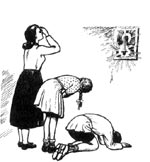 There are no 'canon laws' the outline when to make the sign of the cross and bows. Each
Orthodox patriarchate (jurisdictional bodies) and sometimes each parish has developed
unofficial practices that many laity follow for uniformity but which differ in varying degrees
from each other.
There are no 'canon laws' the outline when to make the sign of the cross and bows. Each
Orthodox patriarchate (jurisdictional bodies) and sometimes each parish has developed
unofficial practices that many laity follow for uniformity but which differ in varying degrees
from each other.
A special note on a bow: some make the bow with a slight incline forward of upper body. Others bow from the waist so that the right back of the hand touches the floor. When a bow is called for below either is acceptable. * Sign of the Cross with no bow [S} * Bow without the sign of the cross [bow] * Cross and Bow: sign of the cross followed by a bow [CB] * Prostration made to the ground [PT] The table below uses a Russian Orthodox guide from England as the starting point because it is very thorough. A secondary source is the Russian Orthodox Jordanville Prayer Book from America. The Jordanville column notes any differences (blank spaces imply identical actions). Again, the table is designed to help to know 'what to do when'...both practices are acceptable and are not in 'competition' with each other. Our guide chart focuses on the Divine Liturgy on Sunday...bowing and prostrations are slightly different during the week and at liturgical prayer times like Vespers as well as during Lent and Holy Week. Please refer directly to the referenced guides for that information.
***Prayers: Thou hast created me O Lord have mercy on me / O God be merciful to me a sinner / Countless times have I sinned O Lord forgive me (Jordanville). No prayer is made when leaving except the same by Old Believers. ***Standard: two BW's, kiss the icon, one BW Other Guides 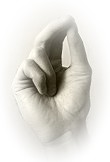 The sign of the cross is made by joining the thumb and two fingers with the remaining two
fingers touching the palm of the hand. The forehead is touched first, then the breast, the
right shoulder and the left shoulder. The right arm is used as has always been the custom from
ancient times. The finger symbolize the Trinity (Father, Son and Holy Spirit) and the two
natures of Christ: human and divine.
The sign of the cross is made by joining the thumb and two fingers with the remaining two
fingers touching the palm of the hand. The forehead is touched first, then the breast, the
right shoulder and the left shoulder. The right arm is used as has always been the custom from
ancient times. The finger symbolize the Trinity (Father, Son and Holy Spirit) and the two
natures of Christ: human and divine.
Kneeling is always a prostration, not upright bended knees only (like in Western Churches) except in the Romanian Orthodox Church. Prostrations: never made on Sunday or from Pascha-Pentecost. When approaching a priest, place the right palm over the left, raise towards the priest and say 'Bless Father' to receive a priest's blessing (rather than a handshake). Some older traditions like the Russian Old Believers only use the bow from the waste and have more detailed guides for bowing and prostrations. Additionally, they use the ancient custom of making the sign of the cross with the thumb and first finger together with three fingers touching the palm. Online Resources Orthodox England Guide (Russian Orthodox Tradition)Summary of the Jordanville Prayer Book Guidelines (Russian Orthodox Tradition) Detailed Guide to Church Etiquette (Greek Tradition) |